
01
Capture as you work
Record a decision or gotcha the moment it happens — one note, not a batch-add marathon at the end of the week.
Setup is the easy part. Memophant's real job is the daily loop that keeps repo-resident knowledge true as the code underneath it changes.
The daily loop
Record a decision or gotcha the moment it happens — one note, not a batch-add marathon at the end of the week.
Drop in a Claude Code transcript; Memophant proposes durable memory and you approve it note by note.
When code moves past a note's recorded commit, the dashboard flags it stale — you fix it before an agent trusts it.
Conventional-commit prefixes and a two-tier secret-scan gate everything before it lands in your repo.
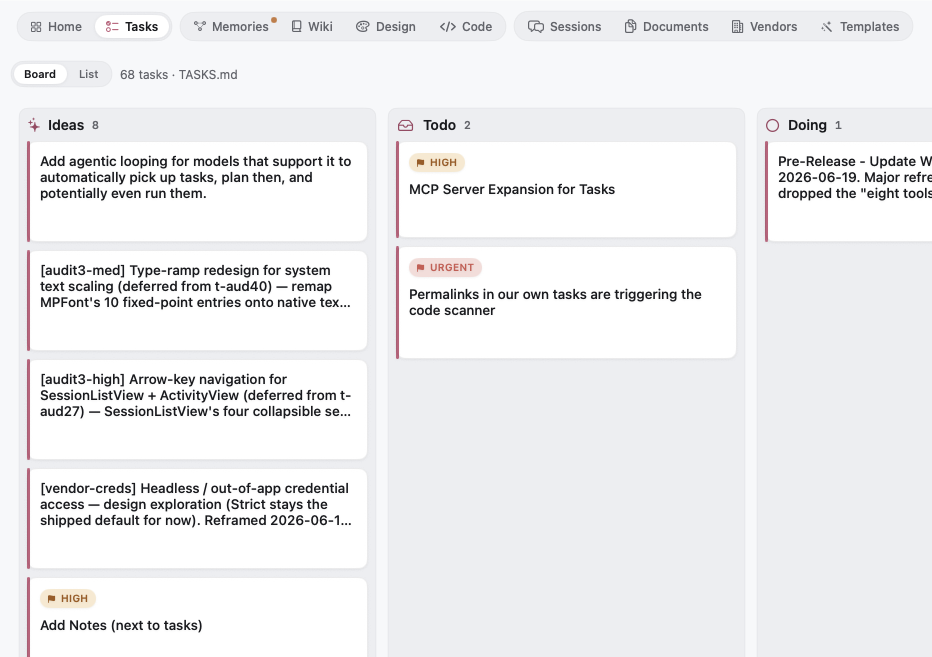
Tasks tier
The board lives in your repo as plain markdown. The app renders it; the file owns it — so humans and agents edit the same lines and the board always reflects reality.
Capture as you go
Credentials, documents, and repeatable setups aren't memory notes — but they're part of the same daily loop, captured in their own tiers the moment they come up.
Hit or mint a new API key? An agent can store it as a vendor over MCP — the secret goes straight to your Keychain, never the repo — and fetch it later to run a command. Every read and write waits on your one-click approval.
A launch plan, an audit PDF, an exported report — park it in the Documents tier so it travels with the project and a clone, versioned alongside everything else.
Done the same setup twice? Capture it once, then run /memophant-template in your agent — prerequisites, steps, variables, verification, all from the repo.
One-shot actions
Each of these streams its proposals so you accept, edit, or reject one item at a time. Nothing lands silently.
Point Claude at your READMEs and design docs; it proposes .memory/ notes, deduped against what the repo already records.
Bootstrap long-form architecture and runbook pages from a fresh repo, with a regenerated sidebar — review before publish.
A fast pass over all notes: dedupe, merge, reclassify, and propose new relations — human-approved, per item.
Distill, Migrate, Generate, Consolidate, and Run with Claude all run on Claude — they use the Anthropic API, so they need your own key (kept in your macOS Keychain). Everything else on this page works without it.
Start the daily habit that keeps your AI memory honest.