
Provenance on the note
A note can record the source files it depends on and the commit it was reviewed against. That stamp is what turns 'is this still true?' from a guess into a check.
A wiki or note system that goes stale silently is worse than no system at all — because agents and humans will confidently act on out-of-date facts. Setup is easy; keeping memory true as the code changes is the real problem. This is how Memophant solves it.
A note can record the source files it depends on and the commit it was reviewed against. That stamp is what turns 'is this still true?' from a guess into a check.
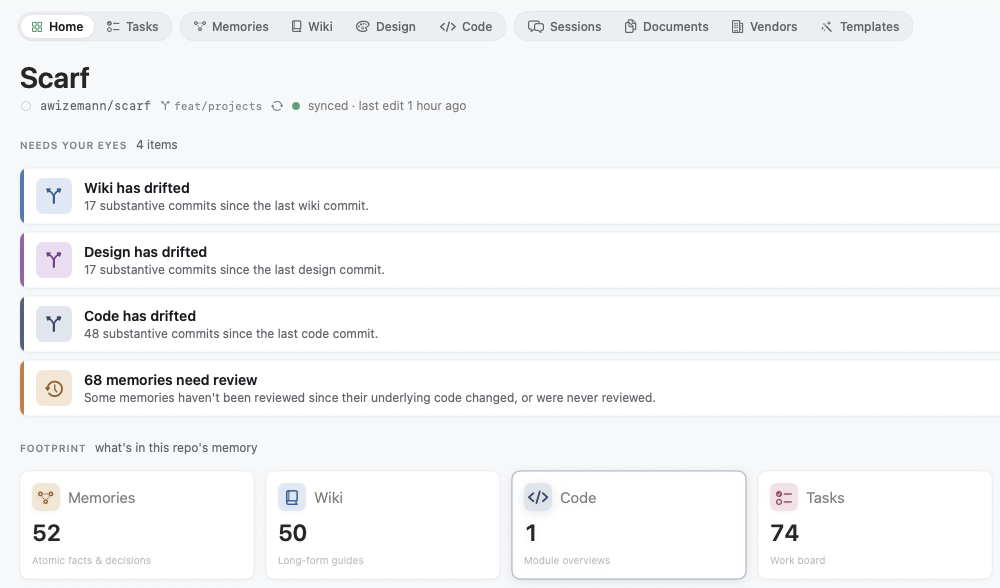
When a note's source files change past its recorded commit — and the changes are substantive — Memophant flags it for review on the dashboard instead of letting it rot silently.
A freshness read across each tier shows what's current, what's aging, and what needs eyes — so you fix knowledge before an agent trusts the stale version.
On the dashboard
Drift doesn't hide in a log. When code moves past a note's recorded commit, a 'Needs your eyes' call-out appears on the dashboard and in the activity feed, linking straight to the tier with a remedy — update it, or dismiss it.
Why it matters
Anyone can write a note. The hard part is noticing when it stops being true. Without drift detection, a stale architectural note is a trap: an agent reads it, believes it, and ships the wrong thing. Provenance plus drift turns your memory into something you can keep trusting as the codebase evolves underneath it.
The memory layer that flags its own staleness before an agent acts on it.